_edited.png)
SK CONSULTANT & KAVYA SAHGAL ARCHITECTS
RAJEEV JI (TEMPLE)
Location: M.P Area: [Insert Area]

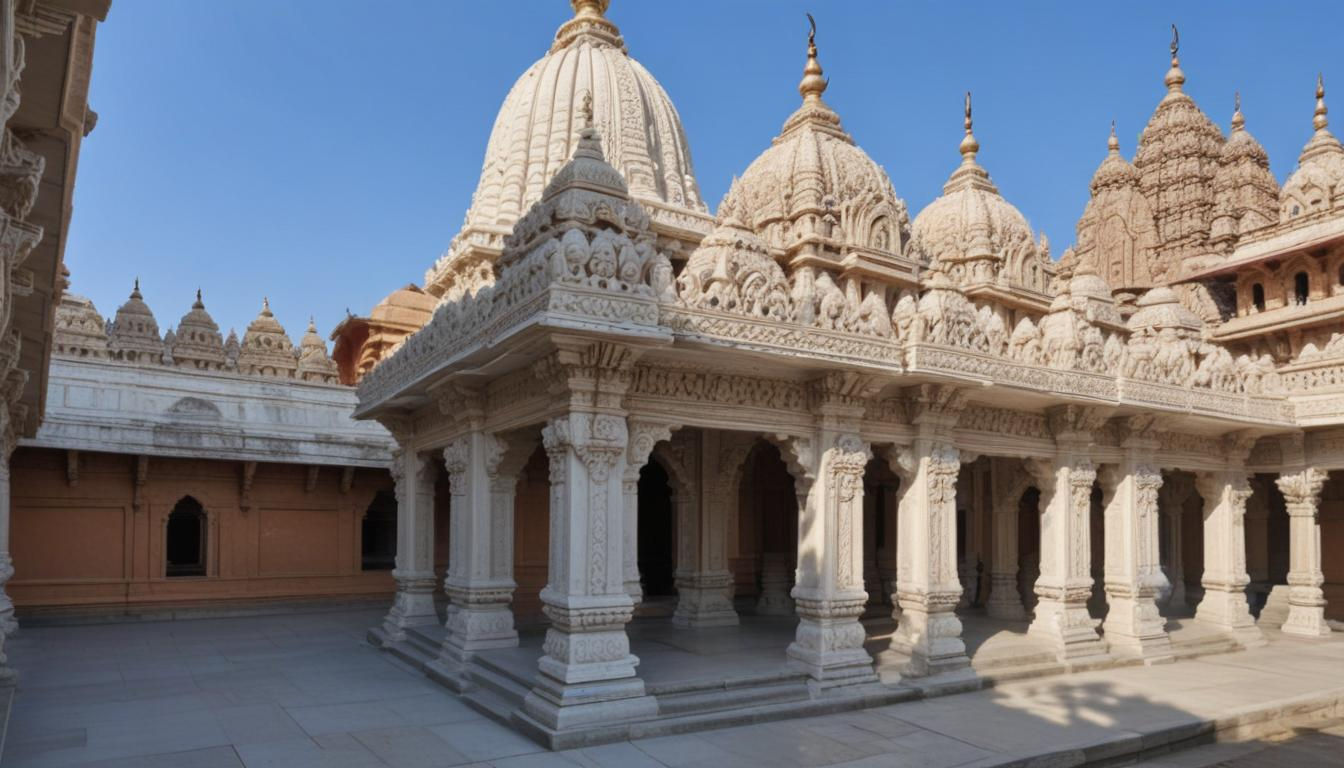
This temple complex was envisioned as a sacred spiritual destination that celebrates India's rich architectural heritage and timeless craftsmanship. Inspired by traditional temple architecture, the design showcases intricately carved stone elements, ornate pillars, sculpted domes, and beautifully detailed mandapas that create an atmosphere of devotion, tranquility, and cultural significance.
Requirements
The primary objective was to create a spiritually uplifting temple complex that could accommodate daily worship activities, religious gatherings, festivals, and community events. The design required spacious circulation areas, prayer halls, covered mandapas, and open courtyards while maintaining the sanctity and traditional character of the temple.
The project also aimed to preserve and showcase the artistry of traditional stone craftsmanship through intricate carvings, ornamental details, and symbolic architectural forms.
Design Intent
The design intent was to create an architectural expression that embodies devotion, serenity, and timeless beauty. Traditional shikharas rise prominently above the complex, symbolizing spiritual ascent and serving as visual landmarks that establish the temple's sacred identity.
Intricately carved columns, decorative arches, and richly ornamented façades celebrate the craftsmanship associated with classical temple architecture. The mandapa spaces provide sheltered gathering areas for devotees while facilitating ceremonial activities and religious functions.
The open courtyard allows natural light and ventilation to enhance the spiritual atmosphere while creating a peaceful environment for meditation and reflection. The spatial arrangement encourages a gradual progression through the temple, reinforcing the experience of devotion and reverence.
Symmetry, proportion, and detailed craftsmanship were carefully incorporated to create a harmonious composition that reflects traditional architectural principles and cultural heritage.
Materials Used
The temple complex utilizes premium natural stone inspired by traditional temple construction practices. Finely carved stone surfaces, ornamental mouldings, sculptural detailing, and handcrafted decorative elements contribute to the monument's timeless character.
Natural stone flooring, carved columns, decorative parapets, and intricately detailed shikharas ensure both visual richness and long-term durability. The use of traditional materials minimizes maintenance while preserving authenticity and cultural value.
Landscape elements, open courtyards, and shaded gathering spaces complement the architecture and enhance the overall spiritual experience.